By Lavender

Head on over to It’s A Birb Thing to see the cute ways Cheeks employs her feet in her daily antics.
Where all the bird news comes to roost!
By Lavender
Head on over to It’s A Birb Thing to see the cute ways Cheeks employs her feet in her daily antics.
by Sherri Moorer
![Bubbles 6-16-16[4895]](https://theroostonline.blog/wp-content/uploads/2018/10/bubbles-6-16-164895.jpg?w=525)
We live in the woods, so we don’t get trick-or-treaters. Despite the spooky ‘vibe’ of Halloween, it turns out that people don’t really want to take an adventure down our driveway to find out what lay on the other ends of the trees. It’s just as well. Zack bit a princess twelve years ago when we were in a neighborhood. He had moral objections to trick-or-treating. The kids wanted to pet him, he thought they were mooches, and he didn’t understand why they screamed when they fed him their fingers because he should get a treat, too. It was a bad situation. Halloween has been less dramatic since we moved to family land in 2008.
Of course, that means we’ve had to find other ways to celebrate the holiday.
Find out how Zack, Bubbles and the family celebrate Halloween on Feathered Frenzy.
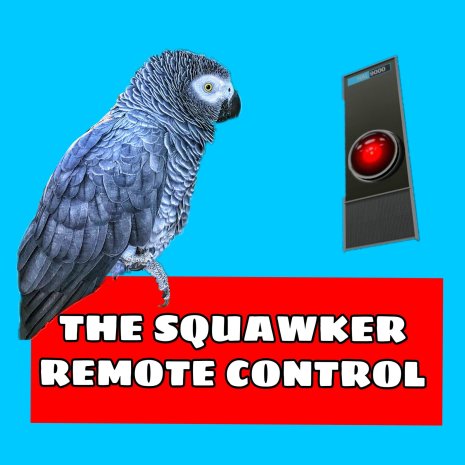
In the October edition, Morty has been called upon to provide advice to a distraught apartment dweller whose birdie companions are becoming too noisy for the neighbors. This parront is desperate for a soundproofing solution to her problem. Morty may have just the answer – but, there are a few bugs to be worked out first. As a side note, Morty’s dealing with his own issues regarding noise and remote controls (and Alexa) that are making him rather cranky.
Read Morty’s hilarious yet cranky response on Beneath the Cage Grate. Y’all might want to put your remote controls and appliances on lock down before reading, just in case!
 What could be more relaxing than enjoying a Sunday Siesta in a cushy armchair and catching up with The Roost’s crazy flock! Catch up with Morty, and then why not head over to get up to speed on how Bubbles and Zack are attempting to keep their mom on the straight, narrow- and sane path! Sunday chuckles are guaranteed on It’s A Birb Thing!
Grab that pencil and enjoy one of our games! Catch up on what’s been happening around social media on our News page.
So relax, catch up, and tell us what you think of The Roost! Have a great Sunday Everybirdie! October edition on the way soon!

” Couples and Tempers” She: “Kiss my… blub,!” He: ” What?… I take it you’re breaking up with me?” © HJ Ruiz – Avian101
via Here Birdie! A Different Approach… — H.J. Ruiz – Avian101

The Ediacaran fauna, a group of extinct species that lived between 571 and 541 million years ago, has been an evolutionary anomaly. Its fossil record contains multicellular organisms, but they are just plain weird, bearing little resemblance to present-day metazoan (multicellular) animals. The two species of “dickinsoniids” shown below, for example, lack a mouth or […]
Some of the highlights in our September Edition include:
Head on over to the blog to read these and many more interesting articles and posts!
 Time to curl up with a cuppa tea or cocoa, turn off the world and enjoy another fun search-a-word! Point your pencil to the Feather Fun page and see how many parrots you can find.
Good luck!
Check out our September’ News on the Wing edition to catch up on bird and wildlife-related happenings over the last few weeks – like the following
 Art my Fire – @ArtLify
“Some birds are not meant to be caged, that’s all. Their feathers are too bright, Their songs too sweet and wild. So you let them go…” ~ Stephen King
 : © Yoshinori Mizutani ‘kawau’ (Birds) Series
Fascinating article from phys.org . Follow the link here to the website and article.
August 23, 2018 , University of Sheffield

A centuries-old mystery behind the shape of a bird’s egg has been solved by scientists at the University of Sheffield as part of one of the longest-running scientific studies of its kind.
The study, led by Professor Tim Birkhead from the University’s Department of Animal and Plant Sciences, has discovered the reason why guillemot eggs have such a peculiar shape – a mystery that has been puzzling biologists for hundreds of years.
Guillemots lay and incubate their single egg on bare cliff ledges close to the sea, which led scientists and nature enthusiasts to believe that the egg’s pointed shape had evolved to help it roll in an arc – thus keeping it from the cliff edge should it become dislodged
However, Professor Birkhead, who has been studying the behaviour of guillemots, puffins and razorbills on Skomer Island in Wales for almost 50 years, has discovered that the egg’s shape has evolved in order to keep the egg in place and prevent it from rolling away in the first place.
Managed by NatureScot
Commentary, Reviews and Nature Photography
Weekly tips & tricks for your garden and home!
by Michael Cook
Photography by Mark Pouley
Notes and photographs of my morning walks at Seagroves Farm Park in Apex, NC.

 The Roost