With all the informative wildlife blogs we happen upon almost daily, we thought we should share these excellent resources with you and introduce you to people, issues and initiatives occurring around the world on behalf of wildlife conservation and environmental protection.
To this end, we’re launching a new page – Wildlife Blog Watch, to highlight those blogs and bloggers going above and beyond to champion wildlife and the environment!
If you are a wildlife or environmental blogger or know of a blog you think we should showcase, please send a DM on Twitter @TheRoost10 with the details!
The following seven-part article, written in August, 2012, first appeared on Malibu Patch, a local blogsite. It focused on the Snowy Plover winter roosting colony on Surfrider Beach, adjacent to Malibu Lagoon. We reprint it now to reacquaint our readers with the local history of these birds, because for the first time in over seventy […]
On Saturday and Sunday, 27-28 April, we will hold our annual spring camping weekend at the Butterbredt Spring Wildlife Sanctuary and the riparian habitat of Kelso Creek, surrounded by the high desert. Birds we will see are desert residents – hummingbirds, roadrunners, owls, thrashers, and orioles for example – spring migrants (some years we see […]
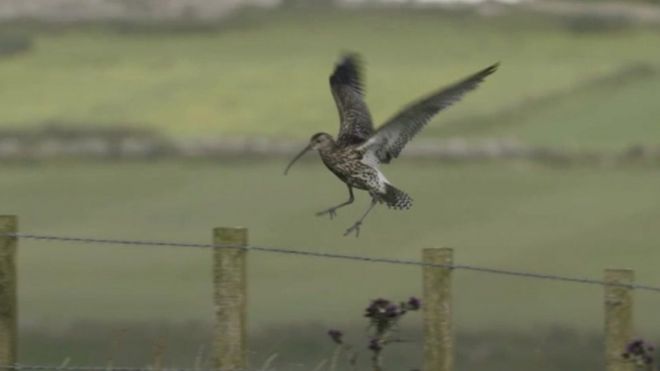
Curlew landing on a fence. RSPB Cymru The curlew is the largest European wading bird, recognisable by its long, down-curved bill and long legs
The number of curlews in Wales has dropped by 80% since 1990 with farming practices partly to blame, a charity has said.
RSPB Cymru has called for farmers to be rewarded for creating suitable habitats for the bird when a new payments scheme comes into force after Brexit.
It is estimated only 400 breeding curlew pairs are left in Wales.
The Farmers’ Union of Wales (FUW) said nature should not be prioritised at the expense of the rural economy.
RSPB Cymru has been working on National Trust-owned land in Ysbyty Ifan, Conwy county, to restore curlew habitats.
It claims the bird’s decline was due, in part, to farming practices.
“[It is linked to] how hay is harvested as silage earlier on in the year, but there’s also been a decline in invertebrates, which is food for the curlew,” said Sabine Nouvet, an ecologist with the trust in Snowdonia and Llyn.
The Welsh Government has consulted on proposals for the agricultural payments system – due to replace the Common Agriculture Policy – and will consult further later this year.
The term waterbird is used to refer to birds that live on or around water. Waterbirds are well adapted to their aquatic lives. They have feet functioning as paddles, and their feathers are made to be waterproof and air tight. Thank you to all the photographers that submitted photos of birds with the theme WaterBirds,…

 Lavender’s latest It’s A Birb Thing comic finds Cheeks being the sassy little Cockatiel we all know and love!



 The Roost